Wool Insulation in Austin: The Moisture Management Case
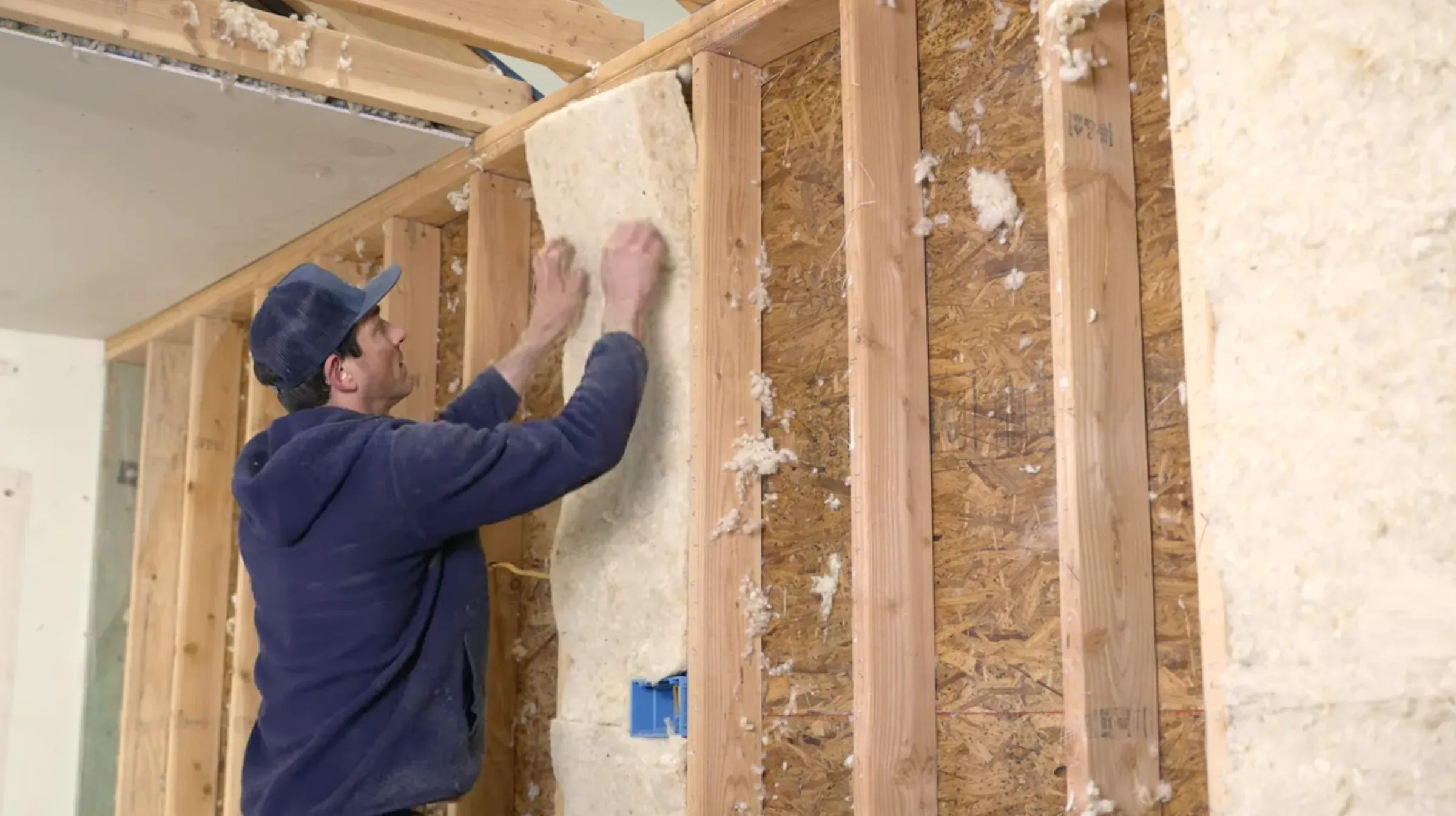
Wool can absorb up to 30 percent of its own weight in moisture and release it without losing thermal performance or supporting mold growth. That behavior, called hygroscopic absorption, is what makes it worth serious consideration in Austin, where the question is not whether moisture will find its way into a wall assembly but what happens when it does.
Most insulation decisions are made by default. The contractor specifies fiberglass batts, the framer installs them before drywall, and the homeowner never thinks about it again, until a wall is opened years later and something unexpected is found inside. Wool is not a default, and that is essentially the only reason most Austin homeowners have never considered it. For families planning a healthy home remodel, it deserves a place in the conversation.
What makes wool different
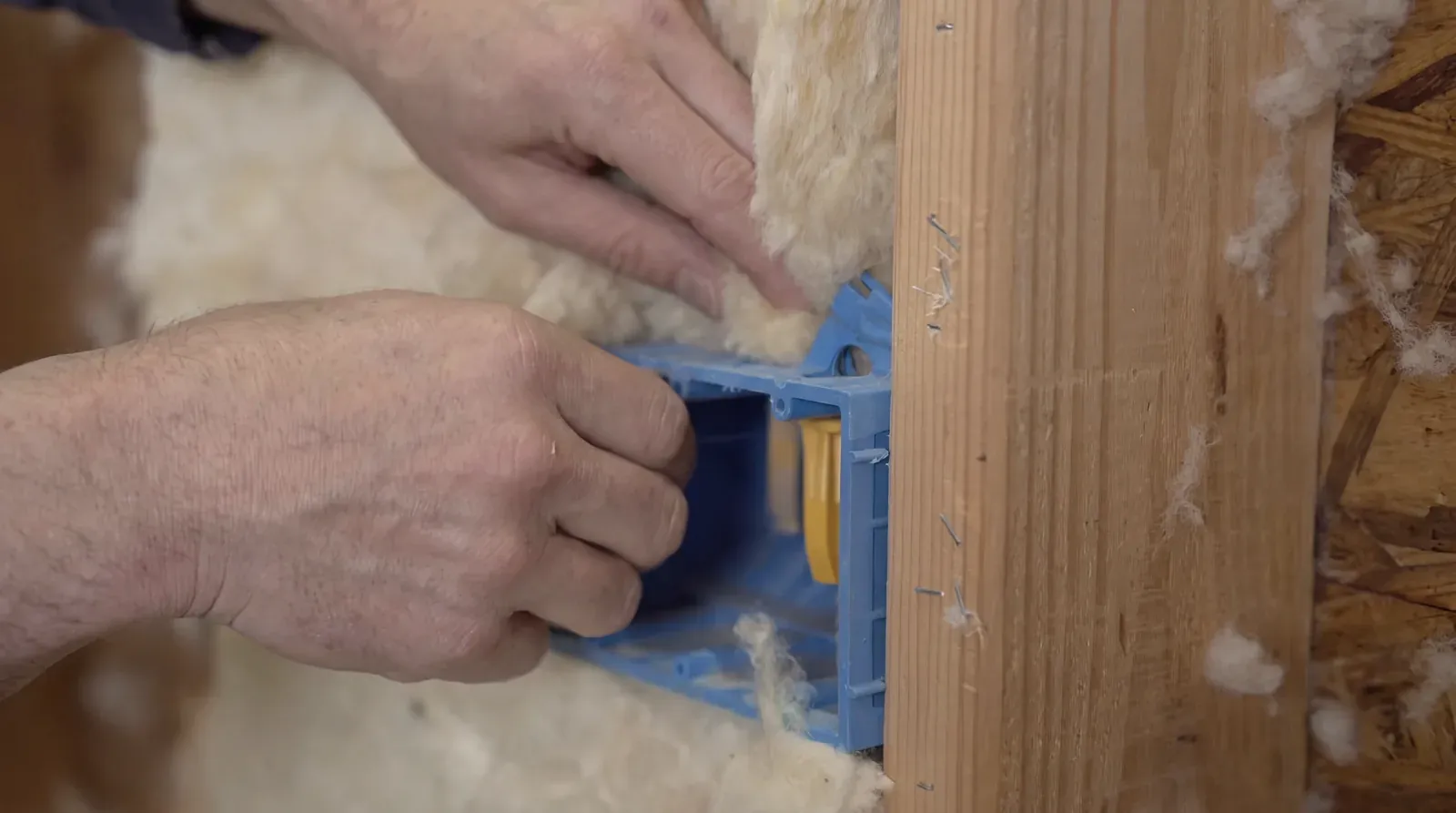
Wool insulation is produced from sheep's wool, pure or blended with a small share of recycled polyester for resilience, treated to meet building code requirements for fire resistance and pest deterrence. It installs exactly like fiberglass batts: cut to fit between studs, friction-fit into wall and floor cavities, no special tools.
What separates it is fiber chemistry. Wool fibers are protein-based and naturally hygroscopic: they attract and bind water vapor inside the fiber itself rather than letting it pass through or collect on surfaces. The binding locks moisture in a chemically stable state, releases it slowly as conditions change, and the fiber is not damaged in the process.
The contrast with the two common alternatives comes down to how each material behaves once moisture reaches the cavity, not how it performs dry, where all three are adequate.
How each material responds when moisture reaches the cavity. All three perform adequately in a dry wall; dry walls are not the Austin condition.
Why Austin's climate changes the equation
Insulation advice written for Denver or Phoenix does not translate to Austin. Those are arid climates where the moisture argument barely applies. Austin is humid subtropical, and the same humidity that makes summer afternoons heavy also works its way into wall assemblies, crawl spaces, and attic floors, hardest from May through September, exactly when air conditioning creates the largest temperature difference across a wall.
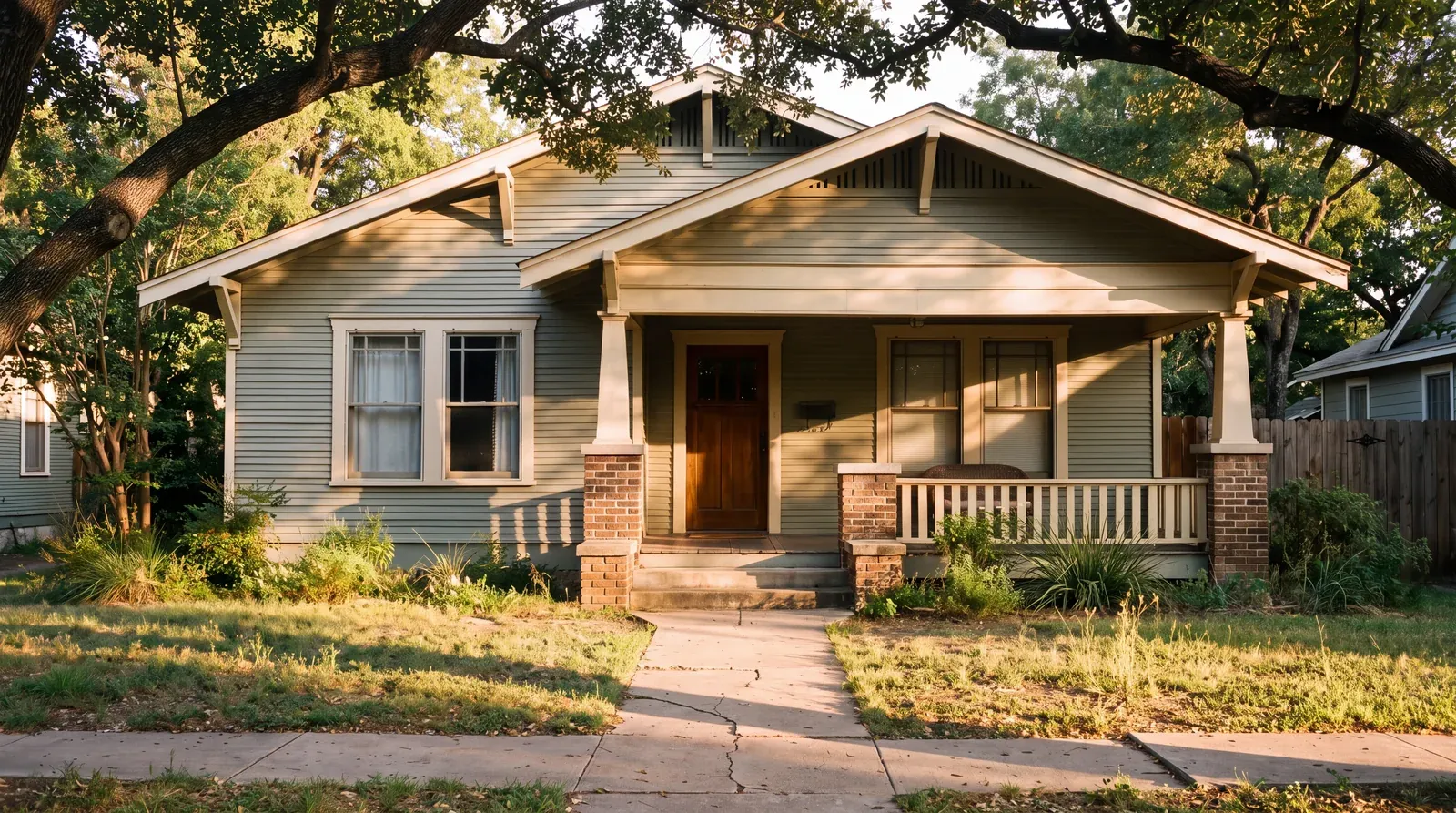
Older Austin homes combine conditions that newer construction and drier climates do not have:
Pier-and-beam foundations let moisture move freely beneath the floor structure, with no slab to interrupt vapor rising from grade.
Pre-1980 wall assemblies were built without continuous air barriers or vapor retarders. Moisture moves through them by design, not by failure.
Old-growth framing lumber is denser and more durable than modern stock, but still vulnerable to long-term moisture exposure.
Gulf humidity patterns put seasonal moisture pressure on assemblies as a routine condition, not an occasional weather event.
Vapor-permeable assemblies that can dry in both directions are the standard recommendation for older Austin homes. Wool is the most capable insulation for that job: it does not fight the moisture movement these walls were built around, it manages it.
How does wool compare to fiberglass and spray foam?
Wool is the only common insulation that actively manages moisture. Fiberglass lets it accumulate, and closed-cell spray foam blocks it until the assembly leaks, then traps it. The scorecard below compares the three on the criteria that decide outcomes in a humid climate.
| Fiberglass | Spray foam | Wool | |
|---|---|---|---|
| Absorbs and releases moisture | ✕ | ✕ | ✓ |
| R-value stable when damp | ✕ | ✓ | ✓ |
| Low mold risk under moisture | ✕ | ◐ | ✓ |
| Forgives imperfect air sealing | ◐ | ✕ | ✓ |
| No off-gassing | ◐ | ✕ | ✓ |
| Lets the assembly dry both directions | ◐ | ✕ | ✓ |
Spray foam is the partial fix: it holds R-value but trades away drying. In an assembly that cannot be perfectly sealed, the combination wool offers is what works.
The scenario that ends badly is predictable: closed-cell foam is applied to an older home on the assumption it will seal out all moisture, but the assembly has small gaps, a penetration, a rim joist, a window rough opening. Moisture enters there and has nowhere to go, and the foam that was supposed to protect the wall now prevents it from drying. That is a documented failure mode in humid climates with older housing stock, and it is why the right assembly for a specific home is settled during the design phase, before anything is opened.
The off-gassing difference
Conventional fiberglass is produced with formaldehyde-based binders, the resins that hold the glass fibers together. They off-gas at low levels, mostly in the early weeks after installation and at elevated temperatures. The concentrations sit well below acute-effect thresholds, but for a household weighing cumulative air quality, it is a relevant input. Our guide to VOCs in a remodel covers where these exposures come from.
Spray foam is a different category. During installation it emits isocyanates that require the space to be vacated, typically for 24 to 72 hours. After full cure most foam is chemically stable, but full cure depends on temperature, humidity, and correct mixing ratios, and off-ratio foam can keep off-gassing at low levels long after installation. That is not rare in field conditions.
Wool's profile is short:
No synthetic binders, so no formaldehyde resins to off-gas before or after installation
No curing process, because wool is a fiber, not a chemical reaction
No evacuation, so the household can be present during installation
Minimal additives: a naturally derived moth deterrent and a code-required flame treatment, both at very low concentration
Thermal and sound performance
Wool's R-value per inch runs about R-3.5 to R-3.8, comparable to fiberglass at the same density, so choosing it is not a thermal compromise and requires no change to wall dimensions or framing. The comparison is genuinely situational: fiberglass remains the rational baseline in some assemblies, which is exactly when the side-by-side earns its place.
Fiberglass batts, R-13
The standard specification, lowest material cost
R-value per inch
About R-3.7, degrades if fibers get wet
Sound dampening
Moderate, roughly 4 to 6 STC points over an empty cavity
Moisture response
Passive, no management mechanism
Material cost
Baseline for the specification
Wool batts, R-13 equivalent
The upgrade, moisture management plus acoustics
R-value per inch
About R-3.6 to R-3.8, stable under moisture
Sound dampening
Meaningfully higher, roughly 8 to 11 STC points over an empty cavity
Moisture response
Active, absorbs, buffers, and releases
Material cost
Typically 20 to 35 percent above fiberglass
Where wool separates most clearly beyond moisture is acoustics. Its fiber density absorbs mid and low frequencies far better than fiberglass at the same thickness, which matters in home offices, bedrooms beside living spaces, and media rooms. When those partition walls are already open in a renovation, specifying wool there costs almost no additional labor, and it is the wall most projects leave at standard specification without ever being asked.
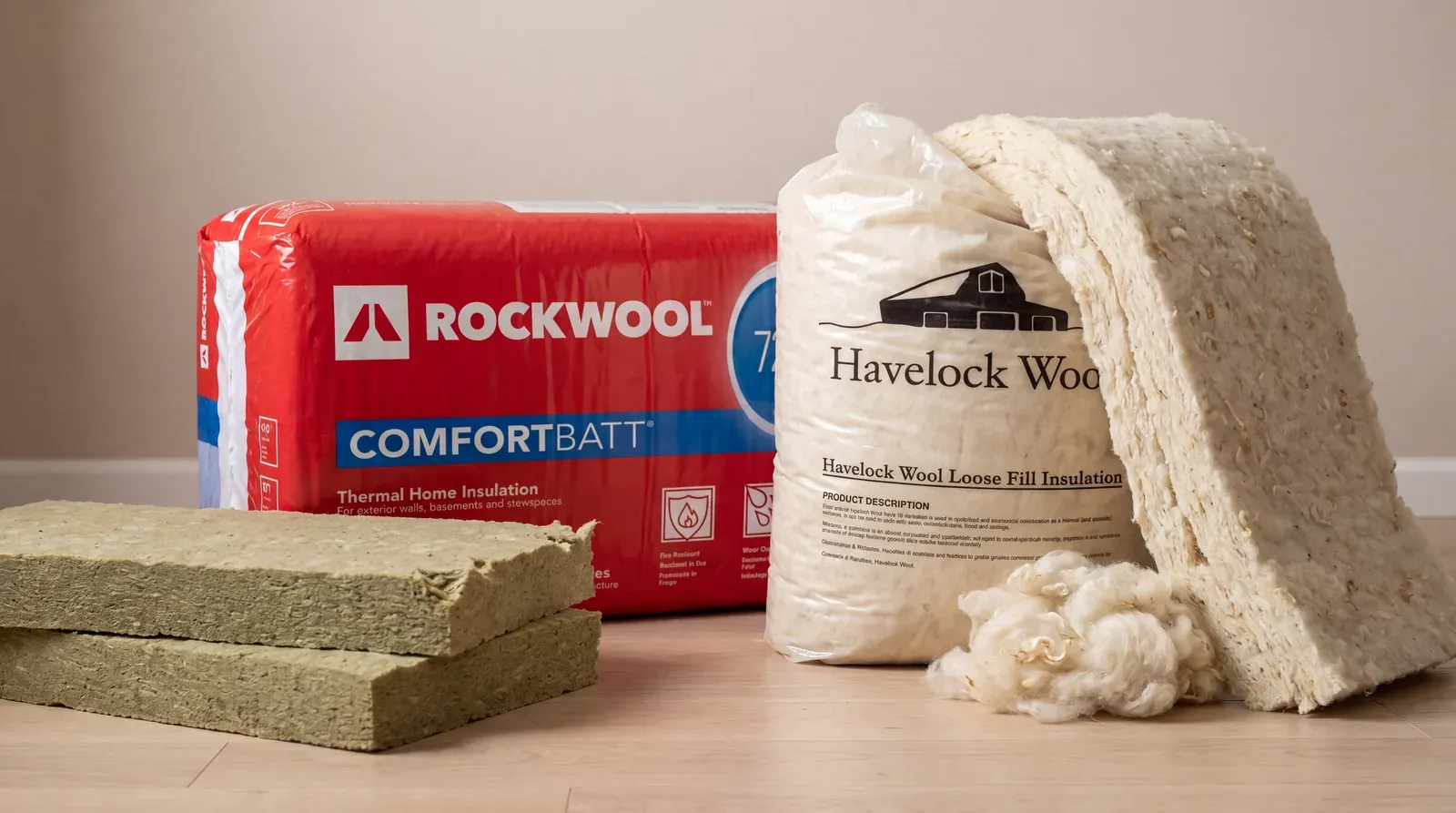
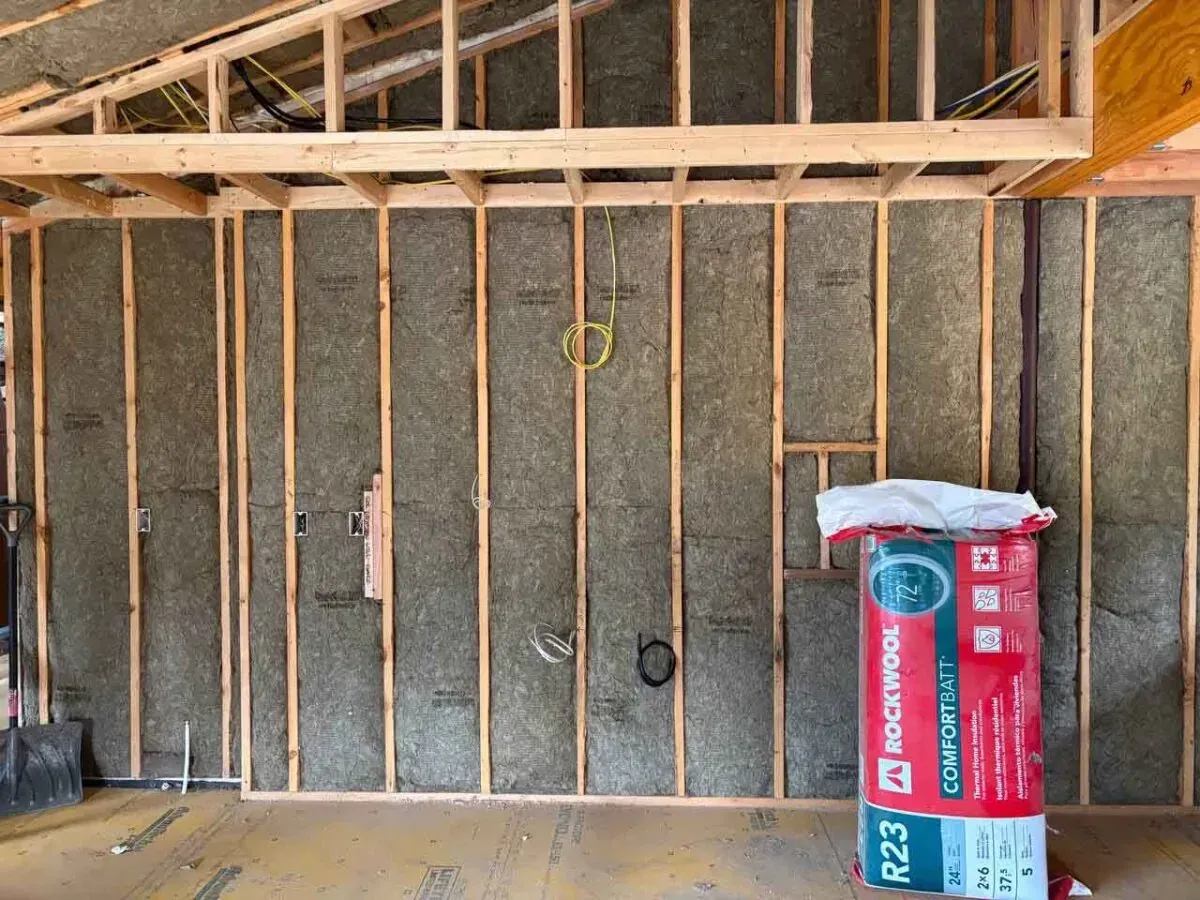
In practice we specify two wools, and they are different materials. Havelock Wool is sheep's wool, the material this article is about, and it leads wherever moisture buffering and air quality drive the decision. Rockwool is mineral wool, spun stone fiber, and it leads where fire rating, sound isolation, or budget set the priority: it does not buffer moisture the way sheep's wool does, but it sheds water, will not burn, and costs less. Many of our projects use both, each where its properties earn the placement.
Settle it before the walls close
Insulation is a design-phase decision. Once the drywall goes up, the specification is permanent, so the conversation belongs before construction begins.
What does wool insulation cost?
Expect a material premium of 20 to 35 percent over fiberglass at equivalent R-value, with identical labor, because the installation method is the same. For a whole-home renovation with 2,000 square feet of insulated wall and floor area, that premium typically adds $800 to $2,000 to the insulation line item, under 2 percent of a mid-range Austin remodel budget. The cost calculator shows where the whole number lands for your project.
The framing matters. Insulation is one of the only materials in a remodel that is essentially permanent and completely inaccessible after the walls close. Tile, cabinetry, counters, and flooring can all be replaced later. The insulation cannot, so you pay the premium once, for the life of the home. We specify wool in three applications where its properties earn that premium:
For new construction built to modern energy code, sealed and wrapped with continuous air and vapor control, closed-cell foam or dense-pack cellulose can be the right answer. Material selection is a design-phase conversation, not a fixed specification: the right choice depends on the assembly, the home's age and foundation, and what you want behind your walls for the next several decades.
What wool insulation doesn't fix
Wool's moisture management is real, but it operates within limits worth stating plainly. It handles the routine moisture movement of a humid-climate wall: vapor diffusion, seasonal cycling, incidental condensation. It does not handle bulk water, a failed flashing, or a crawl space that is actively wet. Those are structural problems, and they come first.
"Wool buffering moisture in a cavity with a bulk water problem is mopping while the tap is still running."
The building science sequence is fixed, and wool belongs in step four. It does not replace the three before it:
- 1.
Seal and drain. Address bulk water entry first: foundation leaks, inadequate flashing at windows and roof penetrations, a crawl space without a vapor barrier. No insulation decision matters until these are resolved.
- 2.
Ventilate. Confirm the assembly can breathe: ridge and soffit ventilation in the attic, exhaust pathways for bathrooms and kitchens.
- 3.
Control vapor. Specify retarders and air barriers appropriate to the assembly and climate. In older pier-and-beam homes, that usually means vapor-permeable assemblies that dry in both directions.
- 4.
Insulate. This is where wool's properties matter, inside a system that has already handled the first three steps.
Practically, that means insulation is specified as part of a broader moisture management assessment during design: vapor control, air sealing, ventilation, drainage, and insulation selected together for one home's conditions. Wool usually ends up in the exterior and partition walls, but as part of a complete specification, not a single-material answer to a systems question. For the ventilation half of the story, the bathroom fan and mold guide covers the mechanics in detail.
Leftover questions
The moisture and cost questions live in the sections above. These are the long-tail questions that deserve a direct answer of their own.
For a significant remodel, exterior walls, a whole-home renovation, or an addition, the premium is typically 20 to 35 percent on material with identical labor. Insulation is the one material that is permanently inaccessible once the walls close, so the premium buys moisture management and a clean air-quality profile for the life of the installation. Whether that trade is worth it for your home is settled during the design phase, while it can still be revisited.
Let's plan what goes behind your walls
Insulation is specified in the design phase alongside every other material. You'll leave with real next steps, whether or not we build together.