Bathroom Remodel Cost in Austin: What Affects the Price
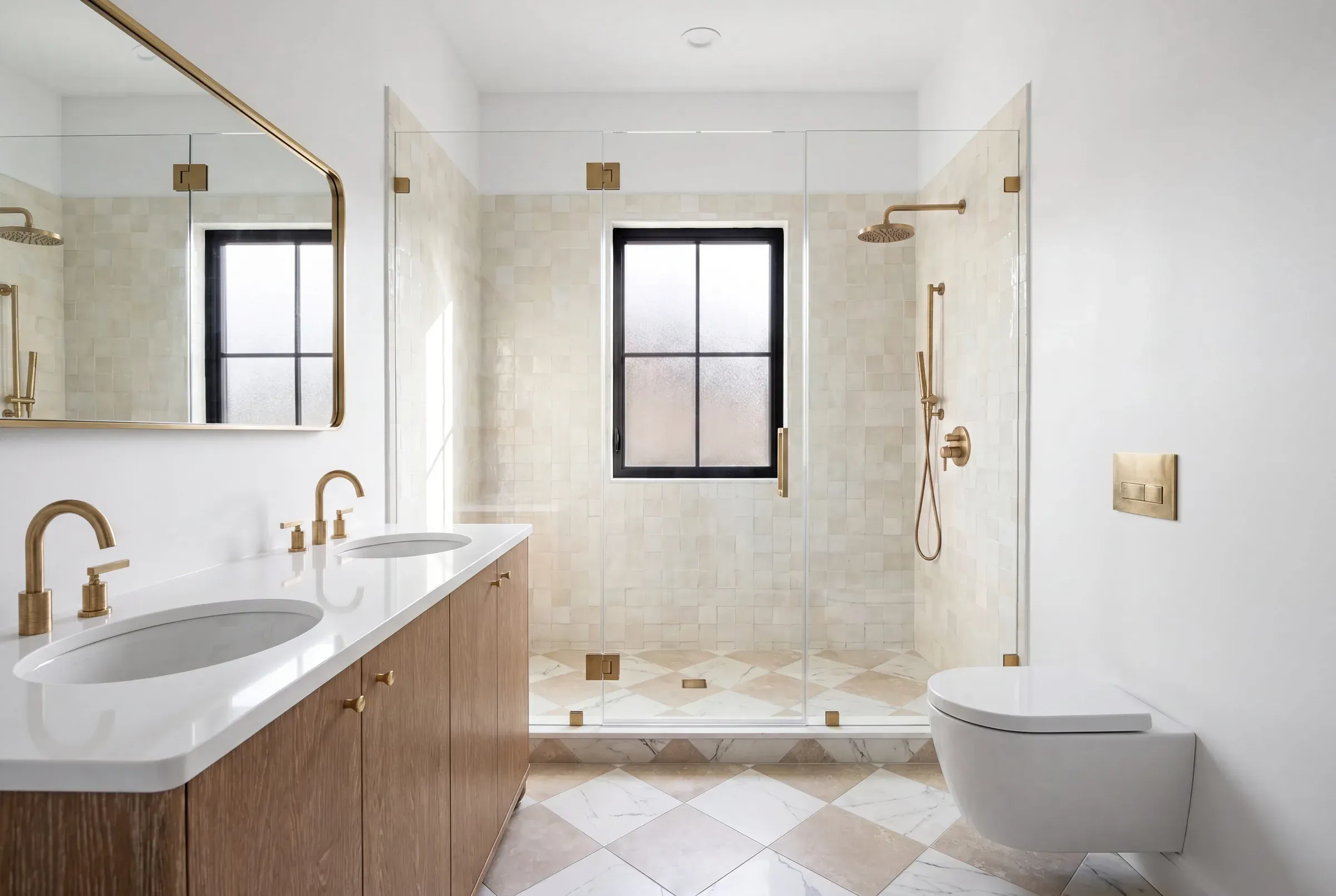
Most people searching for bathroom remodel costs in Austin already have a number in their head, and they want to know if it's realistic. This article gives you a direct answer, organized by scope, so you can place your own project before any conversation with a contractor.
In Austin, a cosmetic bathroom refresh typically runs $15,000–$35,000. A mid-range remodel with new tile and a rebuilt shower lands between $40,000–$75,000. A full primary suite renovation with layout changes, a freestanding tub, and custom tile generally starts at $80,000 and can exceed $150,000 depending on scope and material choices.
Those ranges are wide for a reason. The factors that push a project from one tier to the next are specific and predictable: plumbing location, tile complexity, structural changes, material selections. The rest of this piece explains each of them in plain terms, along with what a complete estimate typically includes. If you want a project-specific range first, the cost calculator returns one in about two minutes.
Bathroom remodel cost by scope
The simplest way to anchor your budget is by scope tier. These ranges reflect completed bathroom remodels in Austin at the higher end of the market, where a proper design phase, permitted work, and managed trades are part of the project.
| Scope | Typical range | What is included |
|---|---|---|
| Cosmetic refresh | $15K–$35K | Vanity, fixtures, paint, lighting, mirror. No tile demo, no plumbing moves; the layout stays. |
| Mid-range remodel Most common | $40K–$75K | Full tile replacement, shower rebuild, new plumbing fixtures, updated vanity and lighting. |
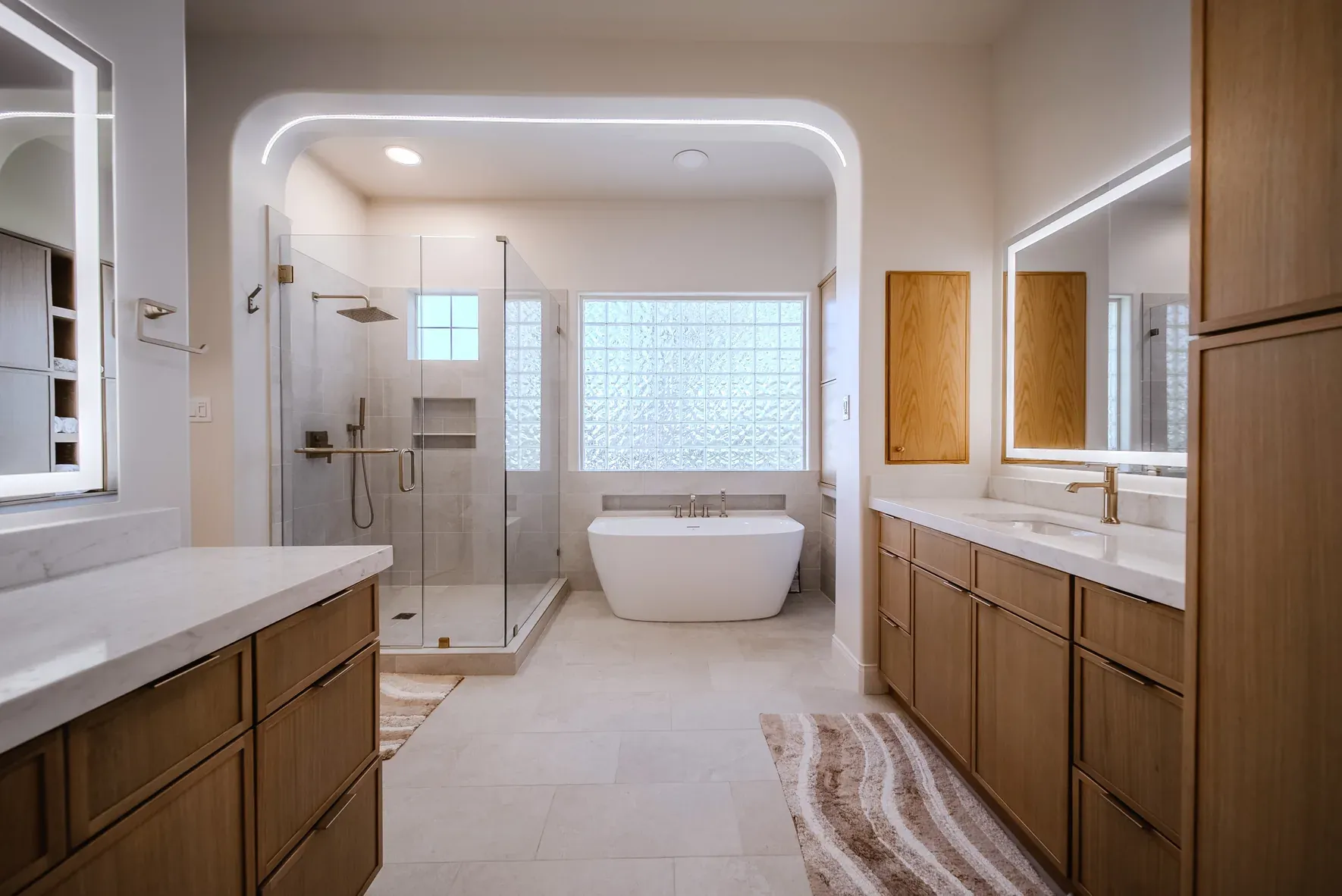
| Full primary renovation | $80K–$150K+ | Layout changes, custom tile work, freestanding tub, steam shower, premium finishes throughout. |
Market-context tiers for the higher end of the Austin market. Ranges reflect permitted work with a complete design phase, not national aggregator averages.
A few clarifications are worth making. "Cosmetic" does not mean simple: replacing a vanity, swapping fixtures, and refinishing a floor still involves a skilled tile setter, plumber, and painter working in sequence. The constraint is scope, with no walls opened and no drain lines moved. "Mid-range" is the most common entry point for homeowners who want a genuinely different bathroom rather than updated hardware. "Full primary renovation" describes projects where the room changes fundamentally: floor plan, shower enclosure, tub placement, and every finish surface.
What moves a project within those tiers, or past them, is a short list of physical variables rather than mystery pricing. Most of them are visible before demolition begins, which means you can read the next section as a self-assessment.
What drives the cost up
Within any scope tier, several variables move the number. Understanding which ones apply to your bathroom lets you calibrate a budget before a contractor has seen it.
Tile selection and complexity
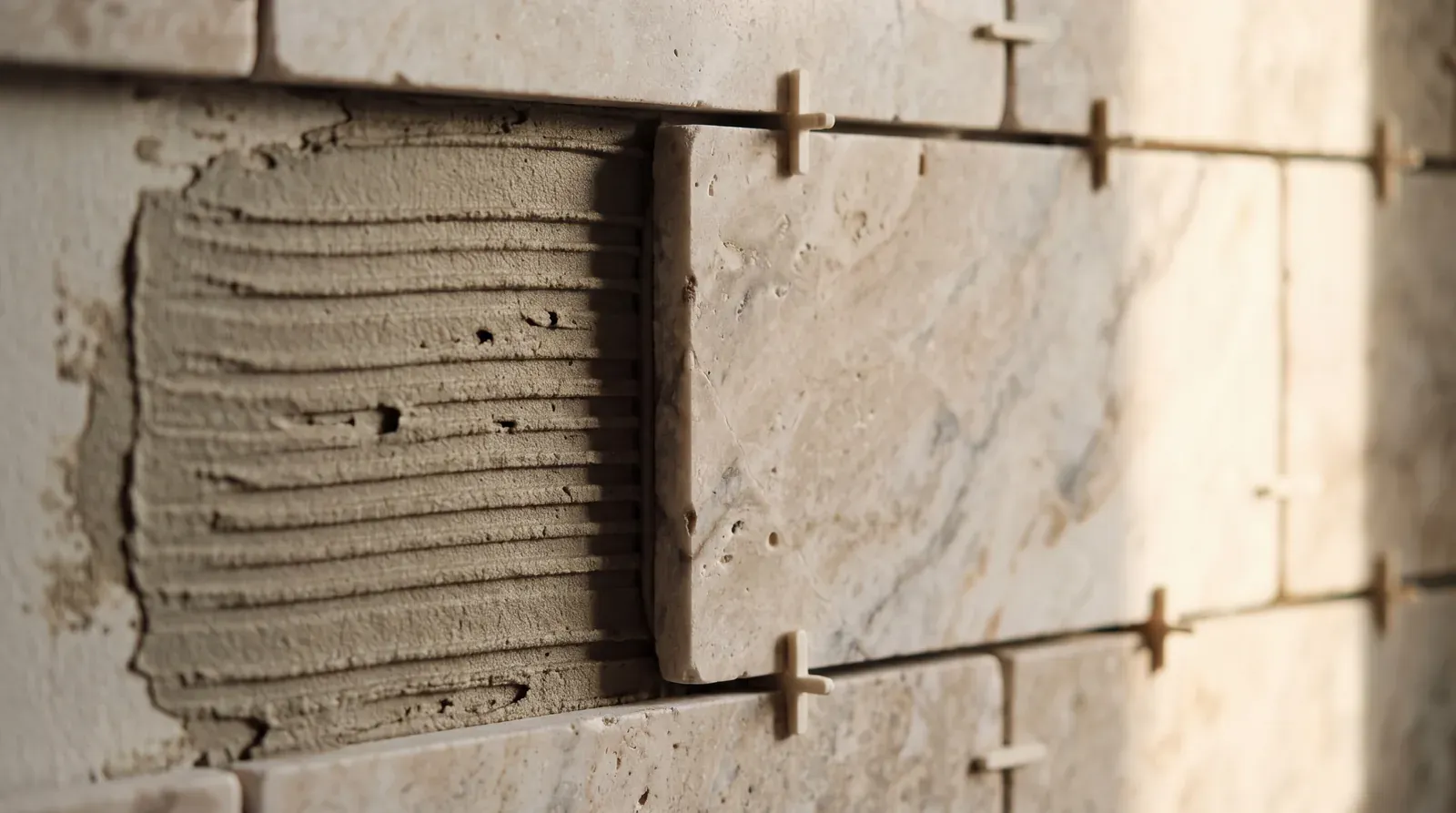
Custom tile is typically the largest material cost in a bathroom remodel. A mid-range porcelain tile at $8–$15 per square foot installed is a very different budget line than a handmade ceramic or large-format stone at $30–$60 per square foot installed. Pattern complexity compounds this: a herringbone or stacked diagonal layout takes significantly more labor than a straight lay, regardless of the material.
In a full primary suite, tile covers the shower enclosure, the floor, and often a feature wall. When those surfaces run 200–300 square feet combined, the difference between mid-range and premium tile can represent $20,000–$40,000 of the total project cost on its own.
Plumbing relocation
Moving a drain line or supply lines is one of the most significant cost escalations in a bathroom remodel. Plumbing was installed to stay put. Rerouting it means opening the floor or walls, sometimes cutting into a concrete slab (common in Austin homes built after 1970), pulling permits with the City of Austin, and scheduling inspections before anything gets closed back up. A simple fixture swap at an existing location can cost $500–$2,000. Moving a drain three feet to accommodate a new shower position can run $4,000–$12,000 depending on the conditions behind the wall.
Layout changes and structural work
Removing a wall to combine a bathroom and closet, raising a ceiling, or expanding a shower footprint into adjacent space involves structural assessment, potential engineering review, and permits. These decisions are made during the design phase, before construction begins, so the cost is known and accounted for before demo day rather than discovered after a wall opens.
Square footage
Primary bathrooms in Austin's established neighborhoods typically run 80–160 square feet. A guest bath or hall bath might be 45–60. The relationship is not perfectly linear, since mobilization, design, and project management costs spread across the project regardless of size, but more square footage means more tile, more waterproofing, and more labor hours on every surface trade.
Fixtures and fittings
Fixture budgets are also the easiest place to self-select. A $2,400 standard package and a $9,000 shower system both produce a working bathroom; only one of them moves the total by a tier.
Get a project-specific estimate before any conversation
Four questions about your bathroom, and the calculator returns a realistic investment range built on Austin conditions.
Why Austin bathrooms cost more than national averages
National bathroom remodel averages, the ones quoted on home improvement sites, typically reflect markets with lower labor costs, less complex permitting, and simpler housing stock. Austin is a different environment in each of those categories.
Older housing stock and hidden conditions
A large portion of Austin's most sought-after neighborhoods were built between the 1920s and 1970s. Homes in Hyde Park, Clarksville, Travis Heights, and Tarrytown frequently have cast iron drain lines, galvanized supply pipes, outdated electrical panels, and waterproofing that was never designed to last more than a few decades. When a wall opens during a bathroom remodel, what's behind it is sometimes a straightforward installation and sometimes a remediation project. That uncertainty is priced differently depending on whether the contractor has seen enough of Austin's older housing stock to anticipate it.
This is part of why the design phase matters so much in this market. A thorough pre-construction assessment, reviewing prior permits, probing access points, and understanding the home's systems before demo begins, reduces the number of surprises that turn into change orders.
The Austin labor market
Skilled tile setters, finish plumbers, and electricians in Austin charge more per day than their counterparts in most national markets, and demand has outpaced supply since 2020. A contractor with established trade relationships is less exposed to this than one who assembles subs project by project, but the underlying labor cost affects every bathroom remodel in the market regardless of who builds it.
Permitting timelines
The City of Austin's Development Services Department requires permits for any work involving plumbing, electrical, or structural changes. Review timelines for residential permits have historically ranged from two to six weeks depending on workload. A contractor who pulls permits as a matter of practice has built that time into the project schedule before demo begins, rather than letting it surface mid-project as an unexpected delay.
What's typically included, and what's an add-on
At the higher end of the Austin remodeling market, a project estimate typically includes design, labor, trade coordination, permit management, and materials procurement. What varies between contractors is how clearly each of those is broken out, and what gets treated as an extra.
Typically included in a complete estimate
If an estimate is silent on any of these, its total is not comparable to one that includes them. Ask where each line lives before comparing numbers.
Common add-ons worth clarifying upfront
Heated floor systems: electric radiant heat under tile runs $800–$2,500 in materials, plus installation.
Exhaust fan upgrade: a code-compliant replacement with humidity sensing runs $400–$900.
Custom mirrors and medicine cabinets: especially frameless or built-in configurations.
Towel warming bars: hardwired systems require electrical rough-in and a dedicated circuit.
Specialty lighting: recessed, niche, or accent lighting beyond standard vanity fixtures.
None of these are exotic, but each one is a change order waiting to happen if it enters the project after demo. Naming them during design is what keeps a fixed price fixed.
How Enso prices a bathroom remodel
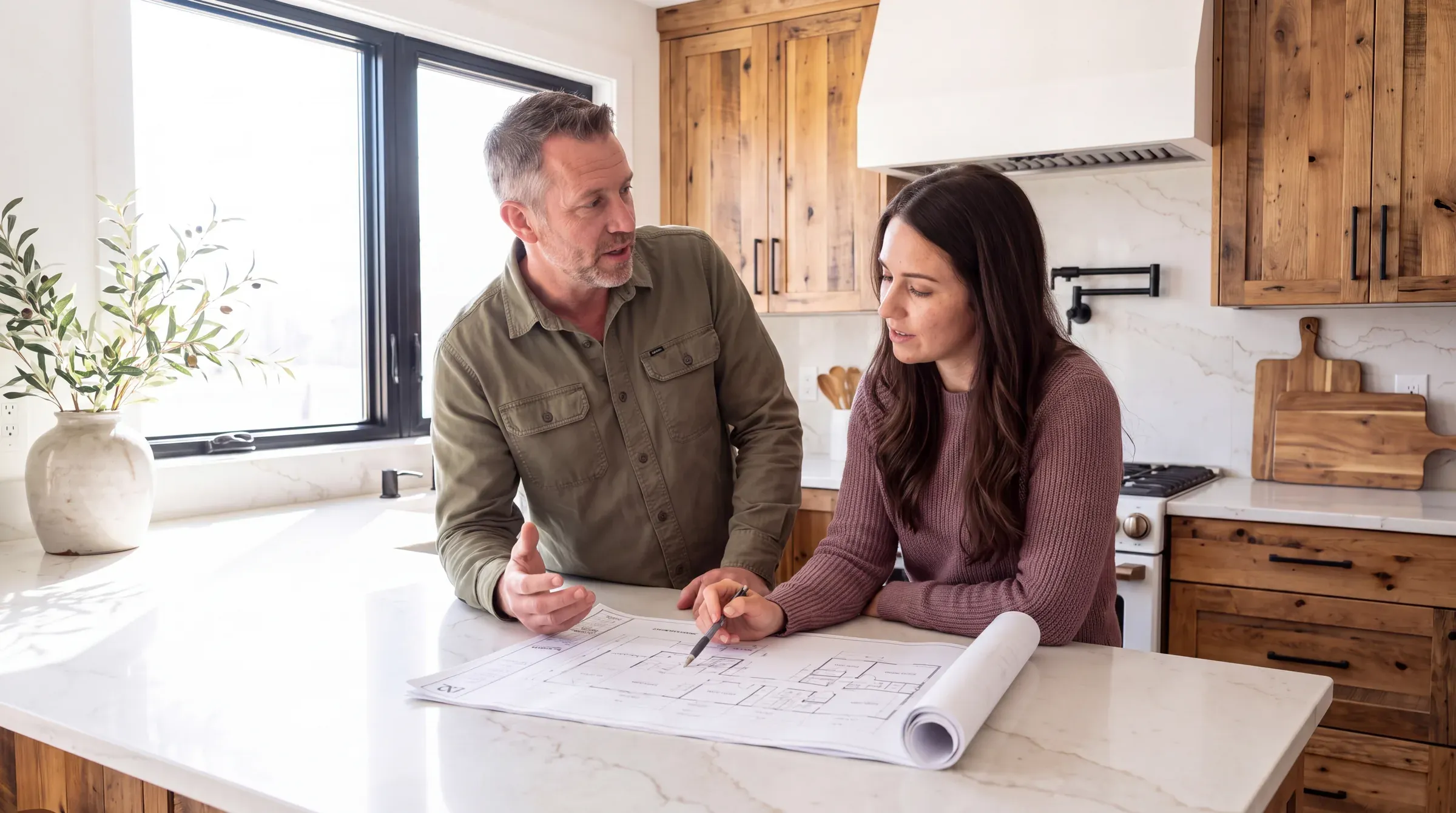
Every Enso project starts with the design phase: two to four weeks at a fixed fee, producing complete design documentation. Floor plan, 3D renderings, full material specification, and a fixed project cost, all before construction begins. That document is the basis for everything that follows, and if you decide not to proceed with Enso after the design phase, you keep the plans.
Once the design is approved and the project moves to construction, the price is fixed. Surprise change orders across Enso's completed projects sit at essentially zero. That is not because nothing unexpected ever happens inside an Austin wall; it is because the design phase is structured to surface those conditions before demo begins. When a wall does open with something unexpected behind it, that is a defined exception with a clear process, not a renegotiation.
You can use the cost calculator to get a project-specific range in about two minutes, before any conversation happens. It accounts for space type, size, scope level, and site conditions specific to Austin. If you would rather start by talking it through, a 15-minute video call works the same way: you'll leave with real next steps, whether or not we build together.
A note on non-toxic materials
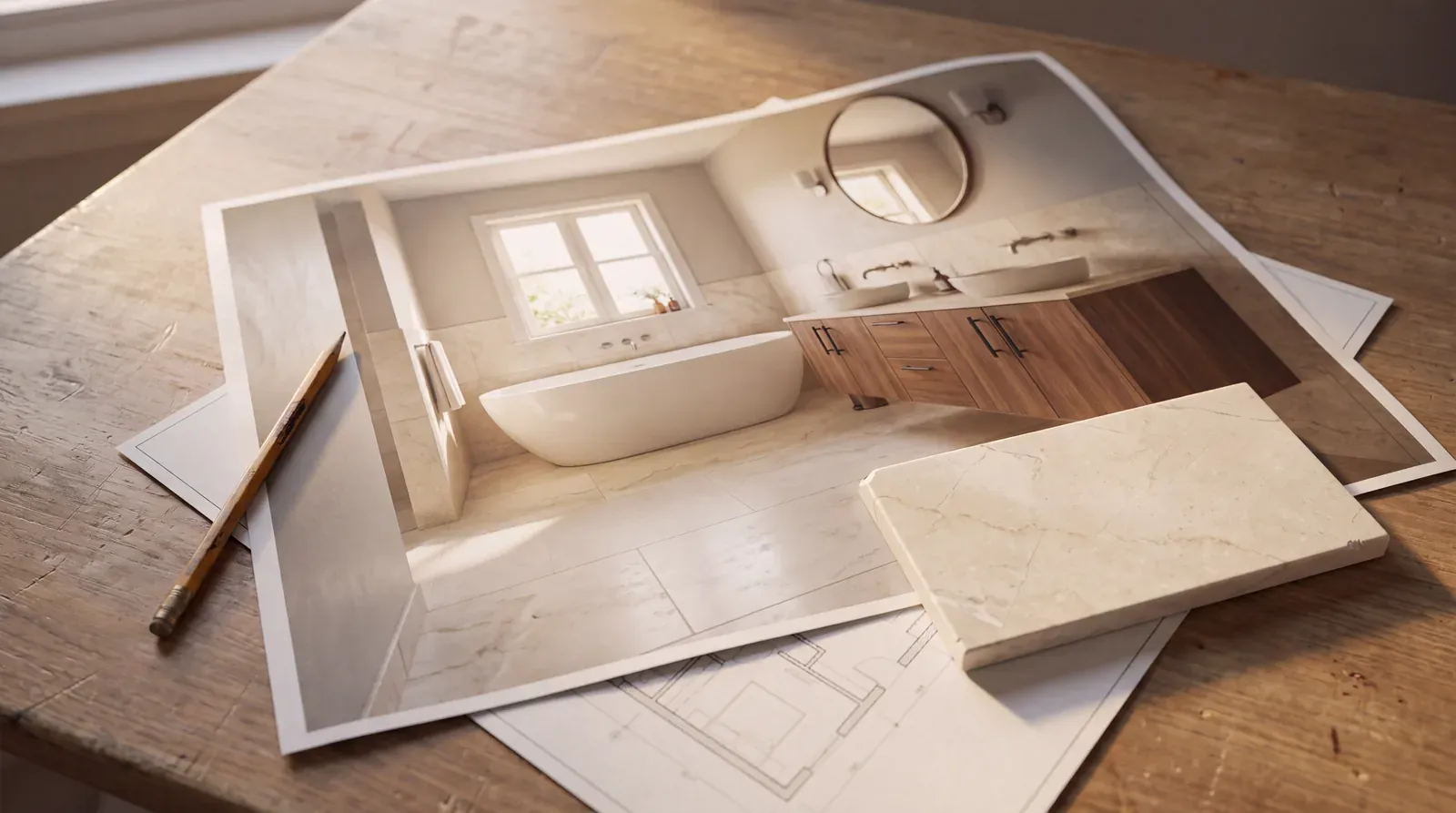
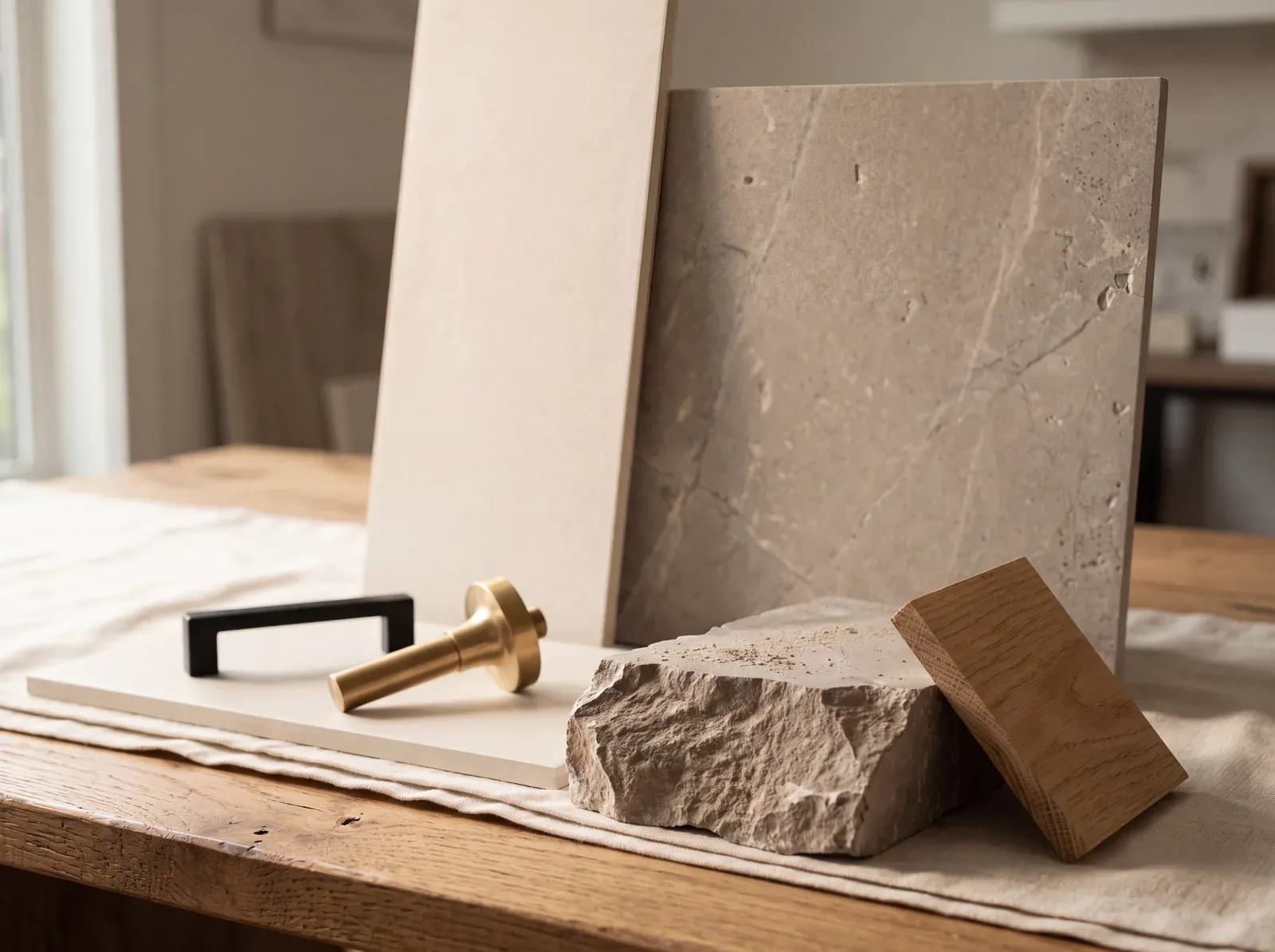
Bathrooms are among the highest-moisture environments in a home, which makes material choices particularly consequential. Standard grout, caulk, and waterproofing products vary widely in mold resistance and VOC content. Choosing better alternatives, such as zero-VOC finishes, mold-resistant substrates rated for wet areas, and formaldehyde-free cabinetry, is something we address during the design phase for every project that wants it.
The honest answer on cost: healthier material choices rarely add dramatically to a bathroom budget. The premium for zero-VOC paint over standard is negligible. A Schluter waterproofing system costs more than a budget-tier sheet membrane, but the difference is small relative to total project cost and meaningfully better performance over ten years. The biggest cost drivers in any bathroom remodel are tile and plumbing work, not the wellness-oriented upgrades.
If this matters to you, raise it in your initial consultation. We'll bring certified options alongside standard alternatives, with specs and VOC data, so you can make an informed call before construction begins.
Frequently asked questions
The cost questions are answered above, in the ranges and the drivers behind them. These are the leftovers homeowners ask most often once the numbers make sense.
Yes, for most work beyond cosmetic updates. Permits are required for plumbing changes such as moving or adding supply or drain lines, electrical changes such as new circuits or fixture relocation, and structural work. Cosmetic work, like replacing a vanity or faucet without moving anything, typically does not require one. Any licensed contractor should handle permit pulling as part of their standard scope, not as an optional extra.
Want a real number for your bathroom?
The cost calculator takes about two minutes and accounts for scope, size, and site conditions specific to Austin. You'll leave with real next steps, whether or not we build together.